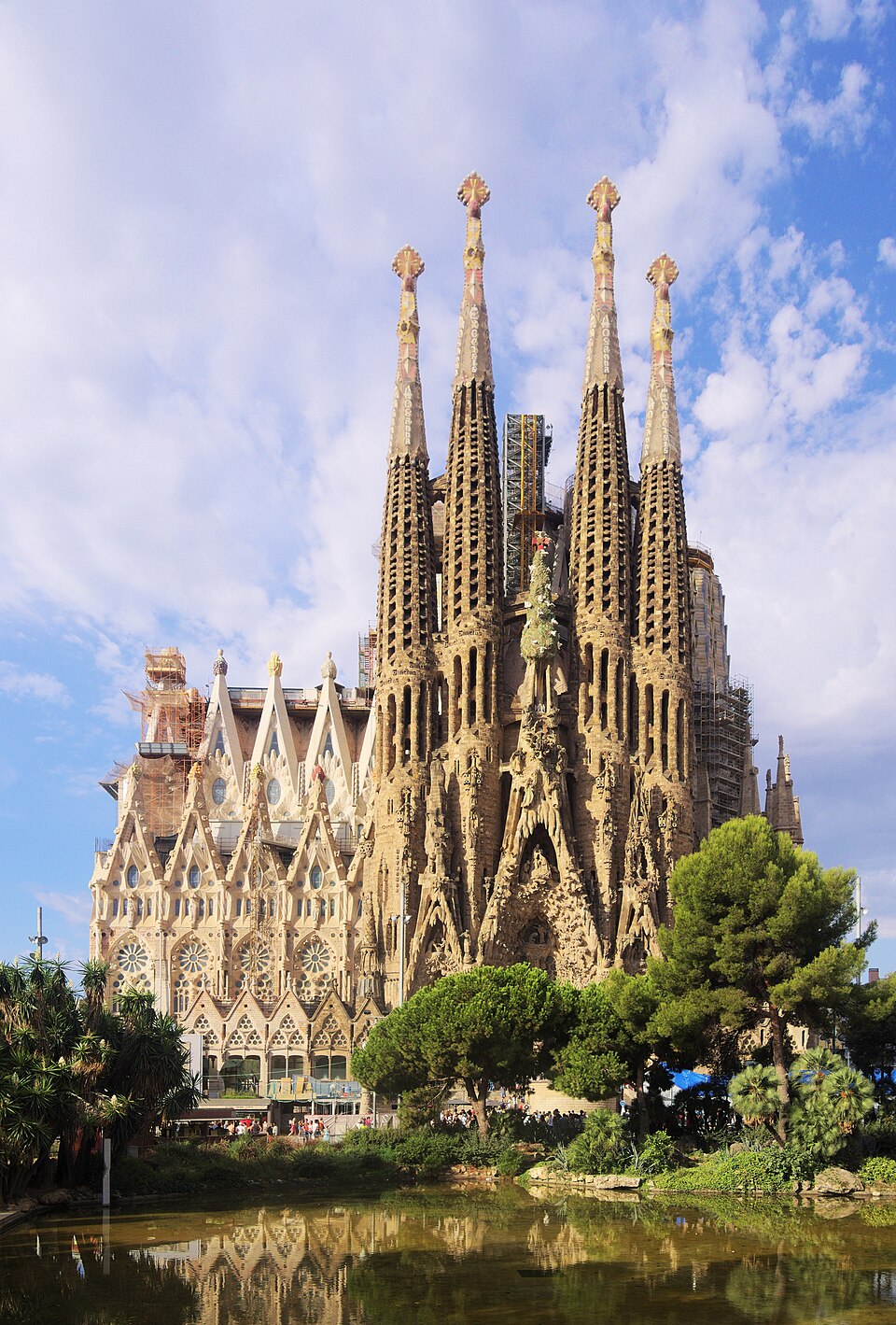
Barcelona's sky has a new, undisputed monarch. After centuries of breathtaking construction and unwavering dedication, the Sagrada Familia has officially reached an astonishing 176 meters in height, claiming its rightful place as the tallest church in the world. This monumental achievement, marked by the completion of the Tower of Jesus Christ and its celestial cross, is not merely a construction milestone; it's a profound testament to artistic vision, human perseverance, and the enduring legacy of Antoni Gaudí. The finalization of this central tower dramatically alters Barcelona's iconic skyline and elevates the basilica to an unprecedented architectural status. The impressive Hauteur Sagrada Familia now captivates onlookers from every corner of the city, symbolizing a new chapter in its storied history.
A New Zenith in Barcelona's Skyline: The Majestic 176m Hauteur Sagrada Familia
The year 2026 marks a historic moment for Barcelona and the world of architecture. On Friday, February 20th, a date etched into the annals of construction, the final segment of the monumental cross was meticulously installed atop the Tower of Jesus Christ, propelling the Sagrada Familia to an unprecedented total height of 176 meters. This makes it officially the tallest church on the planet, a title previously held by Germany's Ulm Minster since 1890.
The journey to this record-breaking Hauteur Sagrada Familia involved the culmination of meticulous engineering and artistic craftsmanship. The Tower of Jesus Christ itself stands at an impressive 172.5 meters. Crowning this magnificent structure is a stunning cross, adding another 17 meters to the basilica's overall stature. Measuring 13.5 meters wide, this cross is a marvel in itself, adorned with gleaming glass and pristine white enameled ceramic, designed to capture and reflect the Mediterranean light, making it a radiant beacon visible across the city. Crafted in Germany in 2025, the cross was ingeniously assembled on site in Barcelona from seven distinct pieces, a testament to international collaboration and engineering precision. Inside this celestial crown, a sculpture of the Agnus-Dei (Lamb of God) by artist Andrea Mastrovito will be placed, a poignant reference to Gaudí's original theological and artistic vision.
The sheer scale and beauty of this newly completed tower are poised to redefine how visitors and locals alike experience Barcelona. Standing at an awe-inspiring 176 meters, the Sagrada Familia now offers an even more commanding presence, a vertical city within a city, inviting contemplation and admiration. For a deeper dive into how this architectural feat was achieved, explore Sagrada Familia: How 176 Meters Makes It World's Tallest Church.
Gaudí's Enduring Vision: From Foundation Stone to Celestial Cross
The history of the Sagrada Familia is as intricate and sprawling as its design. The first stone was laid in 1882, but it was the visionary architect Antoni Gaudí, who took over the project in 1883, who truly transformed it into the architectural masterpiece we recognize today. Gaudí inherited a conventional neo-Gothic design but imbued it with his revolutionary spirit, blending Gothic grandeur with organic, nature-inspired forms and groundbreaking structural innovations. His unique style, characterized by parabolic arches, hyperboloid structures, and an almost biological approach to form, ensured the Sagrada Familia would be unlike any other sacred edifice.
Tragically, Gaudí's life was cut short in 1926, leaving his magnum opus far from complete. At the time of his death, only one of the planned eighteen towers had been built, a stark reminder of the immense scale of his ambition. Yet, his detailed models, drawings, and an enduring philosophy guided generations of architects and artisans who followed. The continuity of construction, spanning over a century, has been a monumental undertaking, fraught with challenges from the Spanish Civil War to the sheer complexity of Gaudí's intricate designs.
The basilica's construction has been sustained primarily through a unique funding model: donations from devoted patrons and, significantly, the revenue generated from the millions of visitors who flock to witness its ongoing creation. Averaging 13,000 visitors per day, the Sagrada Familia stands as one of Spain's most frequented monuments, with every ticket sale contributing directly to its completion. This public engagement underscores the basilica's global appeal and the collective desire to see Gaudí's dream realized. The completion of the Tower of Jesus Christ and its cross is a monumental step forward, bringing Gaudí's initial vision ever closer to its ultimate realization. To understand the profound artistic and structural genius behind these towering achievements, consider Gaudí's Dream Towers: Sagrada Familia's Jesus Cross Completed.
The Significance of 2026: A Centenary of Genius and Completion
The completion of the Sagrada Familia's central Tower of Jesus Christ holds an even deeper layer of significance as it perfectly coincides with the centenary of Antoni Gaudí's passing in 1926. This convergence of a major construction milestone with such a pivotal historical anniversary transforms 2026 into a year of profound commemoration and celebration for Barcelona and the wider architectural community.
Throughout 2026, the city will host a series of commemorative events designed to honor Gaudí's life, his revolutionary work, and his enduring legacy. These will include special exhibitions, academic conferences, and cultural festivities. A particularly poignant event will be a special mass dedicated to Saint Joseph on March 19th, commemorating the exact date in 1882 when the basilica's first stone was laid. These events will offer both locals and international visitors a unique opportunity to connect with the basilica's rich history and the spirit of its creator.
Chief architect Jordi Faulí eloquently articulates the weight of this achievement: "The completion of the cross on the Tower of Jesus Christ represents well more than the conclusion of a construction phase: it's the fruit of many years of work and study of the legacy Antoni Gaudí left us." His words underscore that this is not merely about reaching a height, but about meticulously interpreting and executing Gaudí's intricate vision, ensuring every detail reflects his original intent. While the exterior of the Tower of Jesus Christ is now complete, work will continue on the interior in 2027 and 2028, leading up to the projected final completion of the entire basilica by 2030-2032. This dedication to internal detail ensures that the experience of the Sagrada Familia will be just as rich and profound inside as its exterior promises. For visitors planning a trip, exploring the Sagrada Familia during this centenary year will offer an unparalleled experience, with enhanced exhibitions and a palpable sense of historical significance.
Beyond the Height: What Makes the Sagrada Familia a Global Marvel?
While its new record-breaking Hauteur Sagrada Familia is undeniably impressive, the Sagrada Familia's allure extends far beyond its sheer verticality. It is a UNESCO World Heritage site, recognized globally for its outstanding universal value. Its unique blend of Gothic and Art Nouveau forms, infused with Gaudí's profound spiritual symbolism and deep connection to nature, creates an architectural language unlike any other.
- Symbolism Everywhere: Every façade, every tower, every sculptural element tells a story from the Bible or the life of Christ, inviting contemplation and spiritual reflection.
- A Symphony of Light: Gaudí's masterful use of light, particularly through the basilica's stunning stained-glass windows, transforms the interior into a kaleidoscopic experience, constantly shifting with the time of day and year.
- Nature-Inspired Forms: Columns resemble towering trees, vaulted ceilings evoke forest canopies, and spiral staircases mimic the shells of snails, bringing the natural world into sacred space.
- Engineering Ingenuity: Gaudí pioneered innovative structural solutions, including hyperbolic paraboloids and catenary arches, which allowed for vast, open spaces and an incredible sense of lightness despite the monumental scale.
For visitors, exploring the Sagrada Familia offers a journey into the heart of Gaudí's genius. Practical tips include booking tickets well in advance online to avoid long queues, especially during peak season. Consider a guided tour to fully appreciate the complex symbolism and architectural nuances. The best times to visit are early mornings or late afternoons when the light filters through the stained glass most dramatically. Don't rush; take time to absorb the intricate details on the Nativity, Passion, and Glory façades, and the serene beauty of the interior. The basilica is not just a building; it's an evolving work of art, a living monument that continues to inspire and astound millions, contributing significantly to Barcelona's cultural and economic vibrancy.
The Sagrada Familia stands as a testament to humanity's capacity for ambition, artistry, and unwavering dedication. With the Tower of Jesus Christ now complete and its record-breaking 176m height firmly established, the basilica has not only reached a new architectural pinnacle but has also solidified its place as a symbol of Barcelona's enduring spirit and a global masterpiece in the making. As we look forward to its final completion, the Sagrada Familia continues to inspire awe, inviting us all to witness a living piece of history unfold.